3 (S.A.) Wing: No. 3 (South African) Wing. This was the higher tactical formation to which No. 21 Squadron was assigned, alongside sister units such as No. 12 and No. 24 Squadrons S.A.A.F..
Senior Intelligence Officer: The staff officer responsible for the collation of tactical intelligence, the briefing and debriefing of aircrews, and the preparation of operational reports. Operational Context: The "Squadron Operational State" report dated 28 February 1943 provides a high-fidelity snapshot of No. 21 Squadron S.A.A.F.'s combat readiness as it finalized its consolidation in the Tripolitania sector of Libya. Strategically, this period marks the absolute conclusion of the Western Desert Campaign and the administrative transition into the high-intensity phase of the Tunisian Campaign. The Mediterranean Allied Air Forces (MAAF) were utilizing this operational pause to ensure the Desert Air Force (D.A.F.) was fully prepared for the definitive drive against the Afrika Korps entrenched in the Mareth Line. The reported strength of "29 Fully trained crews" with "Nil" semi-trained crews indicates that the squadron had achieved its maximum effective aircrew density. This represents a significant expansion from the 14 trained night crews available earlier in the month, achieved through concentrated nocturnal training at Soluch Landing Ground during the mid-February "moon period". This consolidation was critical for the execution of the "road purification" strategy—sustained nocturnal interdiction missions against Axis Mechanical Transport (M.T.) and fortifications in the Mareth-Zaret-Wadi Zigzaou area. The report, signed by Captain J.E. Bester, ensures that Air Headquarters, Western Desert (A.H.Q.W.D.) had accurate data regarding the squadron's capacity to deliver 24-hour tactical bombing pressure as the Allied forces moved to breach the Tunisian frontier. This document, archived as Folio 119, stands as the final readiness audit for February 1943. 145
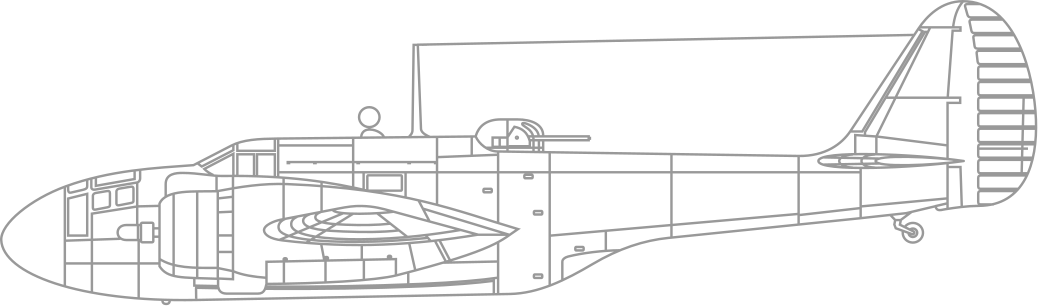
S.I.O. 21 Squadron, S.A.A.F.: Senior Intelligence Officer of No. 21 Squadron, South African Air Force. This staff officer was responsible for the synthesis of tactical intelligence and the preparation of operational reports for the unit, then equipped with Martin Baltimore light bombers.
T.O.O. 1800 hrs: Time of Origin, recorded as 18:00 hours on 2 March 1943. Operational Context: OPREP No. 213 documents a continued state of tactical stasis for No. 21 Squadron S.A.A.F. as it entered the second month of 1943. Strategically, the squadron remained based in the Tripolitania sector of Libya, having transitioned from the pursuit phase of the Western Desert Campaign to the consolidation phase of the Tunisian Campaign. During early March, the Mediterranean Allied Air Forces (MAAF) were utilizing the Desert Air Force (DAF) to refine tactical doctrines and build up airworthy strength for the definitive drive against the Afrika Korps entrenched in the Mareth Line. The "NIL" activity reported for 2 March follows an intensive period of nocturnal "road purification" strikes conducted in late February against enemy Mechanical Transport (M.T.) and fortifications in the Mareth-Zaret-Wadi Zigzaou sector. This operational pause was essential for maintaining the squadron’s high serviceability rate, which averaged 86% across the preceding six months despite the high attrition of desert warfare. Furthermore, the squadron had just finalized its February performance audit, recording 29 fully trained aircrews ready for immediate deployment. This administrative and technical readiness ensured that the unit could provide sustained 24-hour bombing pressure as Allied forces moved to breach the Tunisian frontier. This document, archived as Folio 120 in the AIR 27/274 series, serves as primary evidence of the squadron's status as it prepared to shift its focus back to high-intensity tactical bombing operations. 146
S.I.O. 21 Squadron, S.A.A.F.: Senior Intelligence Officer of No. 21 Squadron, South African Air Force. This staff officer was responsible for the collation of tactical intelligence and the preparation of operational reports for the unit, then equipped with Martin Baltimore light bombers.