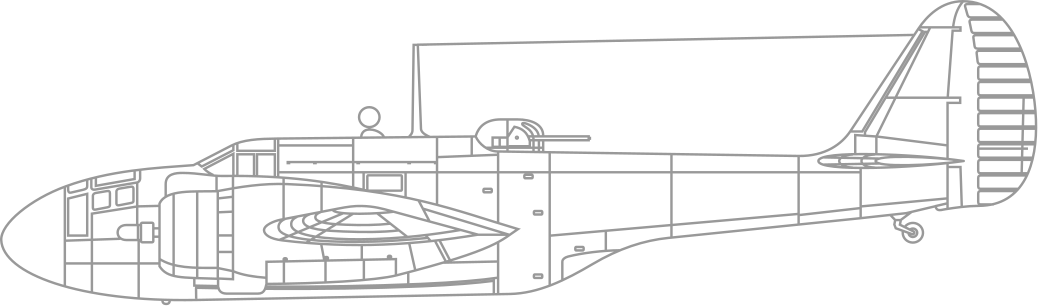
21 Squadron War Diary
0521 hrs Pescara, Italy
Lt. Col. A.C. JANDRELL, D.F.C. returned from BARI to-day. Since the Squadron has been operating on Baltimores it is interesting to note the following statistics :- 4562 sortieshave been flown comprising 9236 operational hours. 13946 250 lb bombs, 6019 500 lb bombs, 6897 A/P. bombs and 2258 Incendiary bombs have been dropped. These facts have been compiled by Capt. Pierre NICOLLE, S.I.O., who has taken advantage of the stand-down to do so.Appendix to war diary – 21 Squadron – 3 SAAF WingNo 21 Squadron terminated its operations with Baltimore aircraft on the 18th July after which date the squadron concentrated all its attention converting to Marauder aircraft.However, from the 1st to the 18th July, the squadron carried out 22 raids – 170 sorties – involving 521 hrs 20 mins. Non-operational flying time amounted to 401 hrs 40 mins — 319 sorties.The Squadron's first target of the month was the Marino Road and Railway station which was attacked in the face of very little ack opposition; slight damage was reported.The next objective was a road bridge near Iesi which, though straddled, did not receive any direct hits – according to photographic interpretation.The next two raids were launched against the Lugo Marshalling Yards; the first one resulted in an overshoot causing slight damage in the town, while the second raid did considerable damage to Marshalling Yards, all bombs falling in the target area, with many direct hits.Wharves at Porto di Corsino were attacked on two occasions, early in the month, but photographic evidence showed no apparent damage.The next raid — against the Faenza-Forli railway line — proved abortive owing to low cloud base. During this raid, seven unidentified aircraft closed in on formation, but sheered off into cloud when 21 Squadron gunners opened fire with short bursts. This line of communication and also the ..rr di- Faenza railway line were attacked two days later, when the weather was clear again. No direct hits were observed on the lines but nearby roads were damaged.An attack on the Rimini Jetty did not prove successful but buildings South of the target were damaged and a fire started.Fuel Dumps and HQ – West of Firenze – were successfully bombed in a raid on the 8th, two large explosions being observed. On this occasion ack was intense, eight out of the ten aircraft being holed; one pilot, Lt Brunnette, who was wounded in his right hand and knee before the bombing run, carried out his bombing and returned with the formation, landing safely.Ack Ack was also intensive during two attacks on Fuel Dumps, near Tavola, which were very successfully bombed. During the first attack the leading aircraft was holed and observer slightly injured, the aircraft landing safely at Castiglione. A second aircraft developed engine trouble just before crossing the bomb-line and whilst returning — alone – was attacked by two fighters, being severely damaged and having to force-land at Accumoli.The following five raids were directed against enemy gun positions SE of Ancona, fair success being gained on most occasions.21 Squadron’s last two targets, on Baltimores, were bridges just North of XXX, but though the objectives were straddled no direct hits were observed.On the 18th July, the Squadron went out of operations. Marauder training flying was greatly accelerated and was soon in full swing with comprehensive training programmes being carried out daily.